
Blended Commerce in Poland: Turn Channels Into One Engine


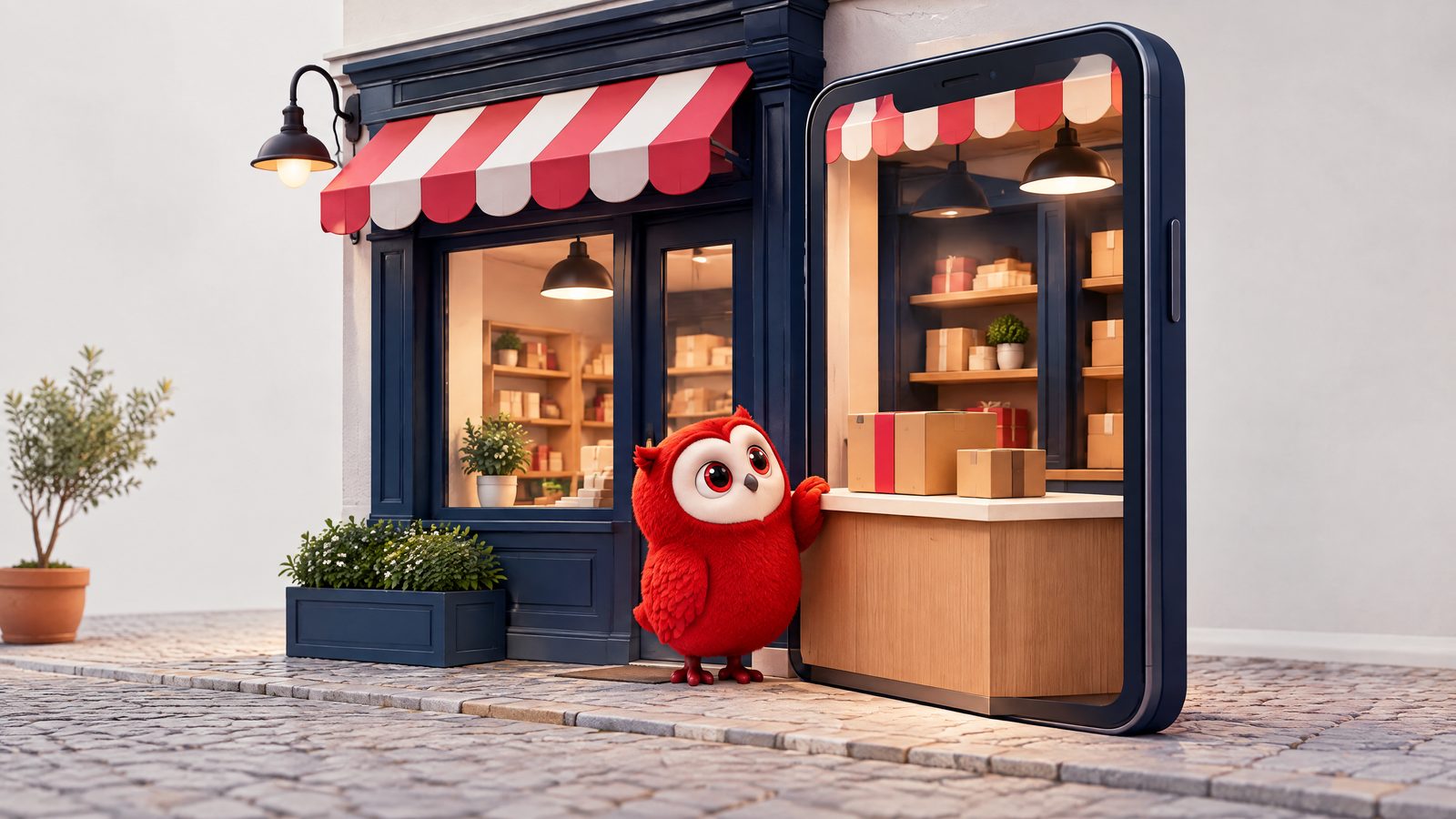
Polish shoppers no longer think in channels. They scan a product in a Warsaw store, check reviews on their phone, order it online for click-and-collect, and return it by parcel locker — all in one purchase. If your retail operation still treats "online" and "in-store" as two businesses, you are quietly losing the customer in the gaps between them.
This guide breaks down what blended commerce actually means in the Polish market, why it is accelerating faster here than in most of Europe, and the concrete moves that turn fragmented touchpoints into one revenue engine.
What "blended commerce" really means in Poland
Blended commerce (the practical evolution of omnichannel) is the collapse of the line between physical and digital retail. The shelf, the app, the Instagram shop, the Allegro listing and the parcel locker are no longer separate funnels — they are one continuous surface the customer moves across without thinking.
Poland is a near-perfect testbed for this. The country has one of Europe’s densest networks of automated parcel lockers, mobile-first shoppers, and a population that adopted contactless and BLIK payments faster than almost anyone on the continent. The result: a buyer who expects friction-free hopping between formats as the default, not a premium.
The mental model matters here. In a traditional retail org, the website team and the store team have separate targets, separate budgets and separate bonuses — so they optimize against each other. In a blended model there is one customer, one inventory pool and one P&L. The job is not to "add e-commerce" to a store or "add a showroom" to a webshop; it is to stop treating them as different things at all.
Why the Polish market rewards blended models now
Three structural forces make blended commerce a winning bet here specifically:
- Logistics density. Parcel-locker and same-day pickup coverage means "buy online, collect locally" is genuinely convenient, not a marketing slogan.
- Marketplace gravity. Allegro and other platforms set the convenience bar — your own store has to match that experience or shoppers default to the marketplace.
- A maturing digital backbone. Retailers investing in digitalization can unify inventory, payments and CRM into a single source of truth — the precondition for any blended model.
For foreign brands entering the market, this is an advantage hiding in plain sight. You can build blended from day one instead of retrofitting it onto legacy systems. Our Enter Poland framework treats unified commerce as part of the launch, not a phase-two clean-up.
The four pillars of a working blended setup
1. One inventory, visible everywhere
A customer who sees "in stock" online and finds an empty shelf will not forgive you twice. Real-time inventory shared across web, store and marketplace is the non-negotiable foundation. A modern e-commerce stack should treat every stockroom and shelf as a fulfillment node.
2. Identity that follows the shopper
Loyalty, browsing history and cart should travel with the person, not the device or the location. That single customer view is what lets you greet a returning buyer the same way in-app as at the till.
3. Fulfillment optionality
Ship-from-store, click-and-collect, locker drop-off and same-day courier should all be selectable at checkout. In Poland, offering locker pickup is often the conversion difference, not a nice-to-have.
4. Consistent brand across surfaces
The story, photography and tone have to feel like one brand whether the touchpoint is a shelf-talker or a Reel. This is where disciplined brand identity work pays back across every channel at once.
A real example: from fabric roll to checkout
Take a Turkish fabric brand entering Poland. Wholesale buyers want to touch the material; retail buyers want to order swatches online and reorder by the meter without a phone call. We built exactly that bridge for Textil World and its sister label Veronica Collection — a digital storefront that mirrors the physical showroom, so a B2B buyer can start a conversation in person and finish the order online without re-explaining who they are.
The lesson generalizes: blended commerce is not about adding more channels. It is about removing the seams between the ones you already have.
How to measure whether your blend is working
Channel-by-channel reporting actively hides blended performance, because it credits the last click and ignores the journey. If your dashboards still ask "did this sale come from the store or the site?", you are measuring the wrong thing. Shift to customer-level metrics that reward the whole journey:
- Cross-channel customer lifetime value, not per-channel revenue — a buyer who browses online and collects in store is often your most valuable, and channel silos make her invisible.
- Click-and-collect attach rate, to see how much in-store traffic and add-on sales your online catalogue is driving.
- Inventory accuracy, because every "available online, missing in store" event is a measurable trust leak.
- Return-to-store rate, since easy in-person returns are one of blended commerce’s strongest retention levers.
Getting these numbers reliably is, again, a digitalization problem before it is a marketing one. You cannot optimize a journey you cannot see end to end.
Common mistakes that quietly kill conversions
- Treating the website as a brochure instead of a transactional twin of the store.
- Running separate promotions online and offline, so loyal customers feel punished for choosing the "wrong" channel.
- Ignoring marketplace-grade delivery expectations — Polish shoppers benchmark you against Allegro whether you like it or not.
- Collecting customer data in three systems that never talk, making personalization impossible.
FAQ
Is blended commerce only for big retailers?
No. Small and mid-size brands often move faster because they have fewer legacy systems to untangle. A focused e-commerce build can deliver a unified setup in weeks, not years.
How is this different from omnichannel?
Omnichannel means being present on many channels. Blended commerce means those channels behave as one — shared inventory, shared identity, shared brand. For the full strategic playbook, see our piece on omnichannel e-commerce strategy.
What should a foreign brand do first?
Unify the data layer before adding channels. A single source of truth for stock, customers and orders is what every later move depends on. We cover the entry sequence in Enter Poland.
Ready to turn scattered touchpoints into one revenue engine? Talk to Team Knocknock and we’ll map your blended-commerce roadmap end to end.
Latest insights

Newsletter
Subscribe our
newsletter

By clicking the submit button, you agree to the
rules for processing personal data.