
Omnichannel E-commerce: Turning Ad Spend Into Sales


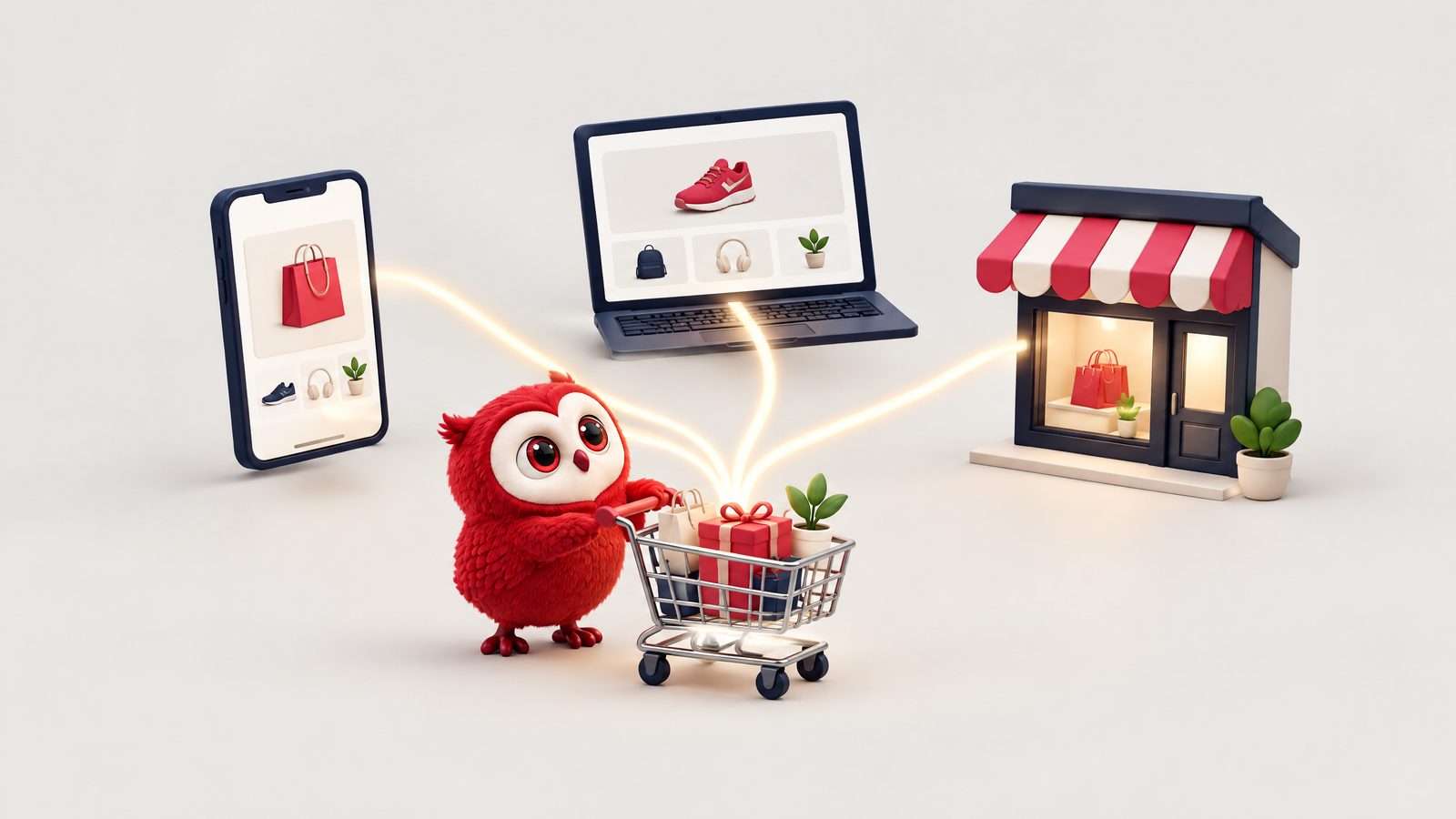
You are paying for clicks. You are not getting enough sales. The gap between "they saw the ad" and "they paid" is where most e-commerce budgets quietly leak. Omnichannel is how you close it — not by adding more channels, but by making the ones you have work as one journey.
Multichannel is not omnichannel
Most brands are multichannel: they run ads on Meta, post on Instagram, send email, and have a store. The channels exist, but they do not talk to each other. A shopper gets retargeted with a product they already bought, or sees one price in an ad and another at checkout.
Picture the same shopper across a week: they tap an Instagram story on the train, browse on a laptop at lunch, get a reminder email that evening, and finally buy on their phone two days later. Multichannel treats those as four strangers. Omnichannel knows they are one person and meets them with the right message at each step. That is the whole difference, and it is worth real money.
Omnichannel means every touchpoint shares context. The ad, the landing page, the email and the storefront behave like one conversation with one customer — because they are. That continuity is the conversion engine.
The distinction sounds academic until you see the revenue gap. A shopper who interacts with a brand across several coordinated channels is worth meaningfully more than one who sees a single ad — they buy more often and stay longer. The brands compounding fastest are not the ones on the most platforms; they are the ones whose platforms behave as a single system.
The leak: where ad clicks die
Before you spend more, find where you are already losing people. In our experience the drop-offs cluster in four predictable places.
- Ad-to-page mismatch — the landing page does not deliver what the ad promised
- Slow mobile load — every extra second of load time shaves conversions
- Friction at checkout — surprise costs, forced accounts, missing local payment
- No follow-up — the 97% who do not buy on visit one are never brought back
Fixing these is usually cheaper and faster than raising budget. A tighter funnel makes every existing click worth more — that is the core of conversion rate optimization, which deserves its own deep read.
Build the bridge: ads → page → conversion
1. Match the message
The headline a shopper clicked should be the first thing they read on the page. This "message match" is the single highest-leverage fix in paid e-commerce. When the ad promises "handmade Turkish cotton towels, 30% off" and the landing page opens on a generic homepage, you have just paid for a click and broken the promise in the same second. Our paid advertising team builds creative and landing pages as one unit for exactly this reason — the ad and the page are written together, never bolted on afterward.
2. Make the path frictionless
Strip steps. Show local currency and local payment. Make the mobile checkout a thumb-friendly two screens, not five. A fast, native-feeling store is a web development problem as much as a marketing one.
3. Capture and continue
Most buyers need several touches. The overwhelming majority of first-time visitors leave without buying — that is normal, not failure. The mistake is letting them leave for good. Email, SMS and retargeting recover a large share of those people, but only when the follow-up is coordinated and relevant rather than a generic "you left something behind" blast.
A worked example: a shopper clicks a Meta ad for a specific product, lands on a matching page, adds to cart, then leaves. An omnichannel system sends an email referencing that exact product, retargets with the same creative, and — if they return — greets them with the item still in the cart. A multichannel system, by contrast, retargets them with a random bestseller and emails a 10% code for the whole store. Same channels, completely different outcome.
Make the channels one system
The brands that win run their channels from a shared view of the customer. Spend follows what is actually converting, and creative is reused intelligently across surfaces.
We saw this compound for Topface, a beauty brand juggling retail, paid ads, social and influencer at once. Before coordination, those channels competed for the same customer and the same budget; afterwards, each fed the next — social created awareness, ads caught intent, and the store closed it. Coordinating those into a single funnel — rather than four competing ones — is what omni-channel marketing and multi-channel marketing are built to do.
Measure the whole journey, not the last click
Last-click attribution punishes the channels that create demand and over-credits the ones that catch it. To run omnichannel honestly you need a view across touchpoints.
- Track assisted conversions, not just last-click
- Watch blended ROAS across all channels, not per-platform vanity numbers
- Tie spend decisions to customer lifetime value, not single-order profit
This is the territory of performance & growth marketing — and increasingly of predictive tooling, which we cover in AI marketing automation and predictive analytics in Europe.
A 30-day plan to bridge ads and conversions
You do not need a full re-platform to start closing the gap. Here is a focused month that compounds.
- Week 1: audit the funnel — find your single biggest drop-off between click and purchase
- Week 2: fix message match and mobile speed on your top three landing pages
- Week 3: turn on coordinated retargeting and abandoned-cart flows tied to the actual product viewed
- Week 4: switch reporting to blended ROAS and assisted conversions, then reallocate spend to what genuinely drives sales
Each step makes the next one more profitable, because you are widening the pipe before you push more water through it.
FAQ
What is the difference between omnichannel and multichannel?
Multichannel means you are present on many channels. Omnichannel means those channels are integrated around one customer, sharing data and context so the experience is seamless across all of them.
My ROAS looks fine but sales are flat — why?
Per-platform ROAS often double-counts and ignores the journey. Blended ROAS and assisted conversions usually reveal that channels are stealing credit from each other rather than driving net-new sales.
Where should I fix things first — ads or the store?
Fix the store first. A leaky funnel wastes every ad euro you spend. Tighten landing-page match, mobile speed and checkout before you scale budget.
If your ads work but your sales do not, the problem is almost never the ad — it is the bridge. Let us build that bridge with you, and turn the spend you already have into conversions.
Latest insights

Newsletter
Subscribe our
newsletter

By clicking the submit button, you agree to the
rules for processing personal data.