
The Micro-Creator Playbook: Slash CAC in Central Europe


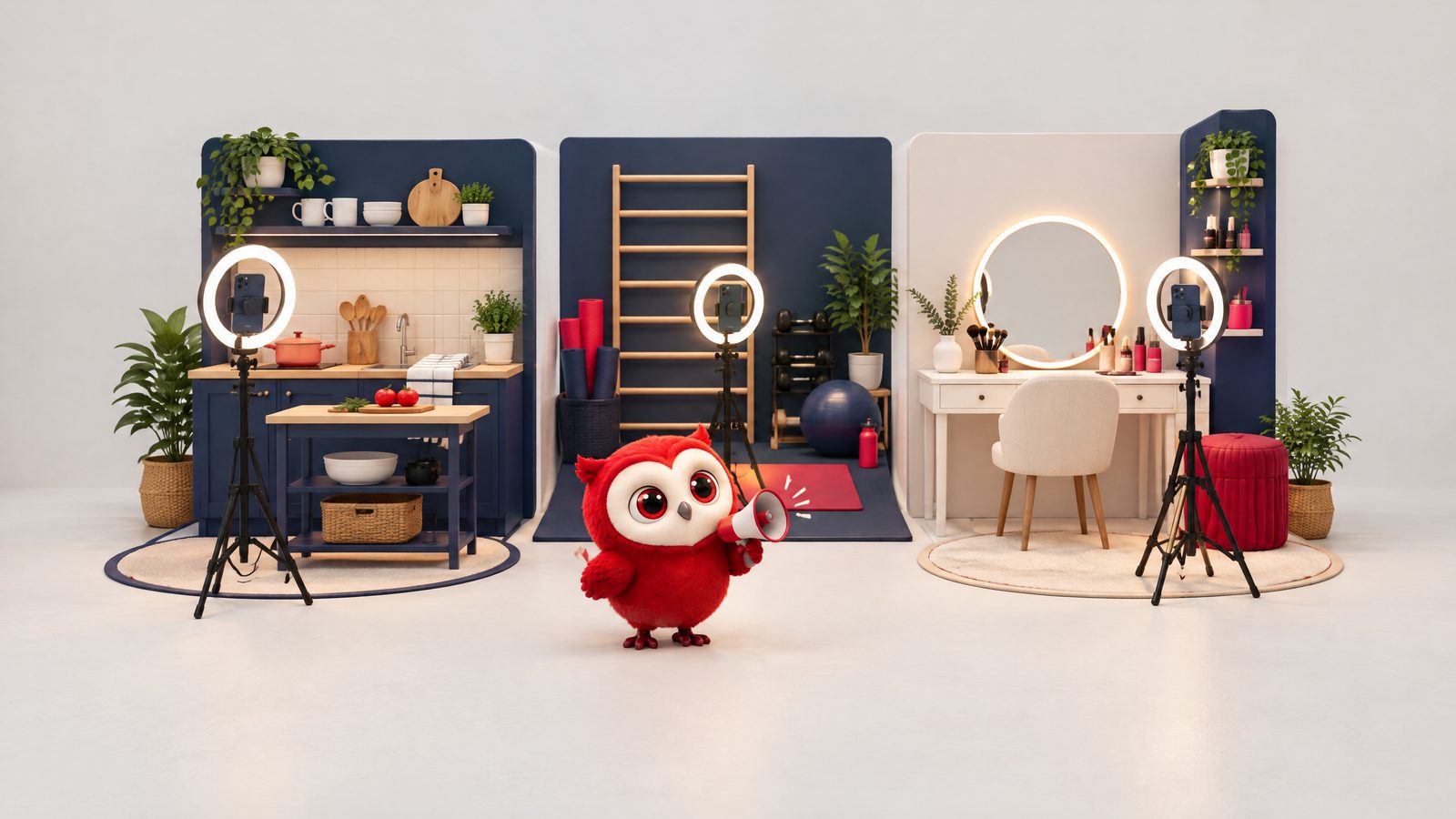
Your paid CAC went up again this quarter, didn’t it? Auction prices in Poland and across CEE keep climbing while click-through quietly falls. Throwing more budget at the same Meta and Google auctions is a treadmill. The way off it is a roster of micro-creators — and this playbook shows foreign brands exactly how to build one that lowers customer acquisition cost instead of inflating it.
Why micro-creators beat mega-influencers on cost
A micro-creator (roughly 5k–50k followers) doesn’t have the reach of a celebrity — and that’s exactly the point. Their audience is niche, local, and high-trust. When they recommend a product, it reads as a friend’s tip rather than a billboard. That perceived authenticity is the single biggest lever on conversion, and it’s precisely what a million-follower account loses as it scales.
The math favors micro-creators in three reinforcing ways:
- Cheaper partnerships — often product-for-post or modest flat fees instead of the five-figure rates mega-influencers command.
- Higher engagement — micro audiences typically engage 3–7× more than million-follower accounts, because the relationship feels personal.
- Better conversion — trust converts, so cost per acquired customer drops even though raw reach is lower. You pay for outcomes, not impressions.
There is a fourth, quieter benefit: risk diversification. One mega-influencer is a single point of failure, but a roster of ten creators spreads your bet — if one post underperforms, the campaign barely notices.
How CAC actually falls — the unit economics
CAC is total acquisition spend divided by customers won. Micro-creators attack both halves: they lower spend (cheaper deals) and raise the win rate (warmer audiences).
A realistic comparison for a CEE direct-to-consumer brand: a single mega-influencer post at €8,000 reaching 1M people might bring 400 customers — a €20 CAC. Ten micro-creators at €400 each (€4,000 total) reaching 200k engaged followers can bring 500 customers — an €8 CAC, at half the spend. That’s the playbook’s core promise.
The takeaway isn’t "never use big influencers" — it’s that for cost-efficient acquisition in CEE, a portfolio of small, trusted voices usually wins on the metric that actually matters: CAC. This sits inside a broader acquisition strategy — see how we frame the funnel in AI-driven customer acquisition in Europe.
CAC also has a sibling metric you should watch: payback period. Cheaper acquisition shortens the time it takes each customer to become profitable, which frees cash to reinvest — the compounding engine behind sustainable performance and growth marketing.
Building your micro-creator roster, step by step
A roster is a system, not a contact list. The brands that win treat it like a portfolio they actively manage — testing, measuring, and reallocating budget toward what works. Five steps build a roster that lowers CAC instead of inflating it:
- Define the niche, not the number. A creator in Polish skincare or Turkish home cooking beats a bigger generalist every time.
- Vet for engagement, not followers. Check comment quality and save rates — not the vanity count.
- Brief loosely, trust the voice. Hand over the message, not the script. Authenticity is the product.
- Track per-creator codes and links. Attribution tells you who to scale and who to drop.
- Re-sign your winners. Long-term ambassadors outperform one-off posts on cost over time.
We run this end to end through our Influencer Lab and weave it into social media management so content and creators move as one engine rather than two disconnected efforts. The roster feeds your organic calendar; your calendar amplifies the roster.
One discipline separates teams that scale this from teams that stall: ruthless measurement. Without per-creator codes you’re flying blind, unable to tell a €4 CAC partnership from a €40 one. With them, every renewal decision becomes obvious.
Cross-border creator math for foreign founders
If you’re a Turkish or Azerbaijani brand entering Poland, local micro-creators do double duty: they cut CAC and they translate your brand culturally. A Warsaw food creator endorsing an imported brand removes the "is this for me?" hesitation faster than any ad.
That cultural bridge is exactly why we built our Enter Poland offering around local voices. A Turkish food brand, for instance, doesn’t just need Polish reach — it needs a Polish creator who can explain why this product belongs in a Polish kitchen, removing the friction of unfamiliarity in a single authentic post. For the wider cross-border angle, read our companion piece on influencer marketing and cross-border creator campaigns.
Common mistakes that blow up CAC
Most failed micro-creator programs fail the same handful of ways. Avoid these and you’re ahead of the majority:
- Chasing follower counts over engagement — you end up paying for reach you can’t convert.
- Over-scripting creators until the post sounds like a brochure and the audience tunes out.
- No tracking — without per-creator attribution you can’t tell winners from losers, so you can’t optimize spend.
- One-and-done — repeated exposure from a trusted face compounds; scattered one-offs evaporate.
- Mismatched niche — a creator whose audience doesn’t want what you sell will never convert, no matter the rate.
Frequently asked questions
How many micro-creators do I need to start?
Begin with 5–10 in one tight niche. That’s enough to test creative angles and attribution without overspending, then you double down on the handful that actually convert and quietly retire the rest.
Should I pay cash or send product?
Early on, product-for-post works well with genuine fans who already use your category. As you scale proven performers, modest flat fees plus performance bonuses keep them committed without inflating your CAC.
How is this different from running paid ads?
Paid ads rent attention in an auction that keeps getting more expensive every quarter. Micro-creators earn attention through trust they already hold, which is why their CAC tends to hold steady — or fall as relationships mature — while paid CAC climbs.
Can micro-creators work for B2B or considered purchases?
Yes. Niche expert creators carry serious authority in professional communities, and a trusted recommendation shortens long consideration cycles just as effectively as it does for consumer goods.
Want a creator roster built and managed for your launch in Poland? Get in touch or explore the Influencer Lab.
Latest insights


Newsletter
Subscribe our
newsletter

By clicking the submit button, you agree to the
rules for processing personal data.